
An exchange which preaches others on governance must start practising it first, says Shyamal Majumdar.

Stock exchanges are expanding the buffet of index derivatives even as the number of stocks permitted to trade in this space, generating an average daily turnover of Rs 450 trillion, is shrinking. This week, the National Stock Exchange (NSE) started issuing futures and options (F&O) contracts based on the Nifty Next 50 Index, bringing the total count of index derivatives to five.

She pocketed Rs 9.12 crore as remuneration in FY16

Exchange-traded currency derivatives volumes are likely to drop in view of new Reserve Bank of India (RBI) rules, casting a cloud over further participation of retail investors and proprietary traders. There are concerns that existing positions without any underlying exposure will need to be liquidated. Also, weighed down by dollar demand from local oil companies and weakness in its Asian peers, the rupee on Wednesday (April 3) ended at a new closing low of 83.44 versus the US currency.

Deven Choksey, managing director of broking firm, K R Choksey Investment Managers shares his concern about 'trading stoppages' with Rediff.com's Prasanna D Zore.

Close on heels of the launch of Gift Nifty (earlier SGX Nifty), domestic exchanges are pushing for extension of trading hours for the onshore derivatives market, said sources. Bourses are waiting for a final approval from market regulator Sebi on the proposal to keep the derivatives market open for longer hours, they said. The move is aimed at attracting more trading members for onshore futures and options (F&O) contracts amid risk that global investors could prefer trading at Gift City given the tax benefits.
Sebi said it was closely monitoring the situation at the NSE following the disruption of trading due to technical issues.
The National Stock Exchange listed the Dow Jones Industrial and S&P 500 on its platform last week.

Cash trading volume declined in 2022, even as benchmark indices outperformed their peers. The average daily trading volume (ADTV) for the cash segment fell 18 per cent year-on-year to Rs 61,392 crore (NSE and BSE combined). The ADTV for the futures and options (F&O) segment (NSE and BSE combined) stood at Rs 125 trillion (notional turnover), up 117 per cent from the previous year.

Issues Rs 358 crore interim dividend, 1:10 bonus and 10:1 split

The Reserve Bank of India's (RBI's) decision on Wednesday to relax restrictions on banks operating in the International Financial Services Centre (IFSC) related to the repatriation of idle funds in foreign currency accounts (FCA) could give a fillip to trading in foreign stocks at the GIFT City.

You could exit on completion of your set target or on spurt in the stock price.

The Securities and Exchange Board of India (Sebi) has introduced an optional T+1 settlement cycle for the markets. T+1 means that settlements will have to be cleared within one day of the actual transactions taking place. The regulator has put the onus on the stock exchanges to decide whether they want to opt for the shorter settlement cycle for any of the listed scrips. This can be done after giving a one-month prior notice to all stakeholders.

Exchanges have twin roles: commercial and regulatory.

Culver Max Entertainment, formerly known as Sony Pictures Networks India (SPNI), has terminated merger agreements with Zee Entertainment, which could have otherwise created a USD 10 billion media enterprise in the country.

The regulator is unhappy with the exchange in the market crash case that occurred in 2012.

Two firms belonging to the Adani group - India's most valued conglomerate - are part of the Nifty 50 index. The group, however, has no representation in the Sensex. And it could stay this way if a proposed index qualification rule change gets approved. Recently, Asia Index, a joint venture between S&P Dow Jones Indices and BSE responsible for index composition, floated a consultation paper where it proposed that a stock must have a derivative contract to be eligible for inclusion in the flagship 30-share Sensex index.

The rout in Adani Group stocks after US-based short seller Hindenburg Research released a report on January 24 has sparked a rebound in trading activity this month. The average daily trading volume (ADTV) for the cash segment (both NSE and BSE combined) so far in February stands at Rs 59,346 crore, and is around 15 per cent more than the previous month's tally of Rs 51,844 crore, which was the lowest in six months. The ADTV for the futures and options (F&O) segment rose to a record Rs 204 trillion (notional turnover) against Rs 202 trillion in January.

The Sensex came under fag-end selling pressure to close in the red for the sixth straight session on Friday as risk-off sentiment prevailed amid unabated selling by foreign institutional investors and concerns over inflation. The 30-share BSE benchmark pared all intra-day gains and declined 136.69 points or 0.26 per cent to end at 52,793.62. During the day, it had rallied 855.4 points or 1.61 per cent to 53,785.71. On similar lines, the broader NSE Nifty dipped 25.85 points or 0.16 per cent to settle at 15,782.15.

Indians spent more on foreign investments during the past 12 months than they have since at least 2012.

Maruti was the top loser in the Sensex pack, shedding around 4 per cent, followed by Bharti Airtel, HUL, NTPC, Bajaj Finance, UltraTech Cement, ONGC and Reliance Industries. NSE Nifty declined 224.50 points to 14,324.90.

The first tranche of sovereign gold bond for 2022-23 will open for subscription for five days from June 20, the Reserve Bank of India said on Thursday.
Equity benchmarks mustered gains for the first time this week on Thursday as investors piled into the recently-battered metal, bank and IT stocks amid expiry of monthly derivative contracts. Snapping its three-session losing streak, the 30-share BSE Sensex rallied 503.27 points or 0.94 per cent to settle at 54,252.53. On similar lines, the broader NSE Nifty gained 144.35 points or 0.90 per cent to end at 16,170.15.

This was a fresh probe based on the inspection of certain derivative contracts both on the BSE and NSE.

Among the Sensex firms, Bajaj Finance emerged as the biggest gainer by climbing 2.95 per cent. Tata Motors, Bajaj Finserv, IndusInd Bank, Sun Pharma, Mahindra & Mahindra, State Bank of India, Larsen & Toubro, HDFC, HDFC Bank, Maruti, Reliance Industries and Bharti Airtel were the other major winners. HCL Technologies, Axis Bank, ICICI Bank, Tech Mahindra and Titan were among the laggards.

PowerGrid was the top loser in the Sensex pack, shedding around 3 per cent, followed by Asian Paints, Axis Bank, Kotak Bank, Bajaj Auto, SBI and M&M.

The RBI's financial stability report has on Wednesday highlighted the disconnect between the real economy and equity market yet again. The central bank observed that Indian equities were trading at rich valuations, with several metrics such as price to earnings multiples, price to book ratio, market cap to GDP and the cyclically adjusted P/E ratio, or Shiller P/E, at above historical averages. For instance, as on December 13, the one-year forward P/E ratio for India was 35.1 per cent, above its 10-year average, and one of the highest in the world.

In the Sensex pack, gainers included HCL Tech, SBI, ITC, Bharti Airtel, Sun Pharma, Yes Bank, Axis Bank, TCS, Asian Paints, ICICI Bank, TCS, Bajaj Finance and Infosys, jumping up to 3.84 per cent.
Bajaj Finserv was the top gainer in the Sensex pack, rallying nearly 7 per cent, followed by Bajaj Finance, Axis Bank, Reliance Industries and IndusInd Bank.
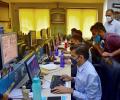
SBI was the top gainer in the Sensex pack, jumping around 3 per cent, followed by Kotak Bank, Axis Bank, Bajaj Auto, Tech Mahindra, UltraTech Cement and PowerGrid. NSE Nifty rose 36.40 points to 15,337.85.

The broader NSE Nifty closed below the 10,200-mark by slumping 99.85 points, or 0.98 per cent at 10,124.905.

L&T was the top gainer in the Sensex pack, rising over 3 per cent, followed by Bajaj Finance, Reliance Industries, IndusInd Bank, SBI and HDFC Bank. NSE Nifty surged 168.05 points to 14,653.05.
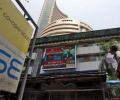
The broader NSE Nifty soared 133.10 points, or 1.22 per cent, to end at 11,573.30.
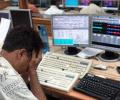
On the Sensex chart, Axis Bank, Titan, IndusInd Bank, HDFC Bank, Dr Reddy's, HDFC and Asian Paint were major losers.

L&T was the top loser in the Sensex pack, dropping 4.99 per cent, after the engineering major posted a 45 per cent decline in consolidated net profit for the September quarter. Titan, ONGC, Axis Bank, HUL, NTPC, M&M and HDFC were the other major laggards, shedding up to 3.32 per cent. NSE Nifty fell 58.80 points or 0.50 per cent to 11,670.80.

Bharti Airtel was the top loser in the Sensex pack, dropping 2.23 per cent, followed by Reliance Industries, L&T, Sun Pharma, HDFC Bank, Maruti, Titan and Kotak Bank.

L&T was the top gainer in the Sensex pack, spurting over 6 per cent, followed by Hero MotoCorp, HDFC Bank, IndusInd Bank, Maruti, HDFC and HCL Tech. On the other hand, ITC, SBI and Bharti Airtel ended in the red.
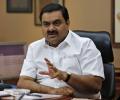
Adani group on Friday rejected NDTV's assertion that Sebi approval is necessary to acquire interests in RRPR, saying the promoter entity is not a part of the regulator's order that restrained Prannoy and Radhika Roy from accessing the securities market. Terming the contentions raised by RRPR as "baseless, legally untenable and devoid of merit", Vishvapradhan Commercial Private Ltd (VCPL) said the holding firm is "bound to immediately perform its obligation and allot the equity shares" as specified in the Warrant Exercise Notice. In a regulatory update, Adani Enterprises Ltd said VCPL has received a reply on behalf of NDTV and RRPR over the Warrant Exercise Notice dated August 23, 2022.

Top laggards among the Sensex pack included Yes Bank, SBI, HDFC, Axis Bank, Kotak Bank, ITC, RIL, M&M, Tata Motors and ICICI Bank, losing up to 3.61 per cent.

Axis Bank was the top gainer in the Sensex pack, soaring over 13 per cent, followed by ICICI Bank, HDFC Bank, IndusInd Bank and Bajaj Finance. On the other hand, Sun Pharma, UltraTech Cement, Titan and Asian Paints were among the laggards.
 © 2026 Rediff.com - Investor Information - Advertise with us - Disclaimer - Privacy Policy - Sitemap - Feedback - About us - Terms of use - Grievances